

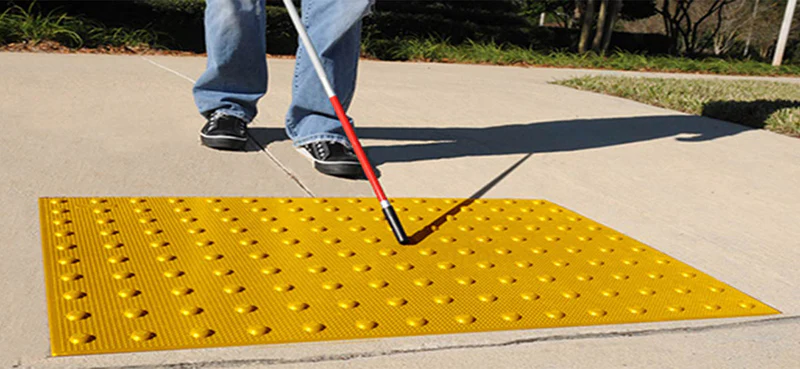
Walk through any modern city or town, and you’re likely to encounter them beneath your feet: textured, circular bumps arranged in neat patterns on sidewalks, at crosswalks, and around public transit stops. These unassuming yet critical elements are known as truncated domes, often referred to as detectable warning surfaces or tactile paving. While they might go unnoticed by many, for individuals with visual impairments, these patterns are indispensable navigation tools, silent guardians that enhance safety and independence within the bustling urban landscape. Understanding their purpose, design, and strategic placement is key to appreciating their profound impact on accessibility and inclusive urban planning.
The Silent Language of the Pavement: What Are Truncated Domes?
Truncated domes are standardized tactile surfaces designed to provide a distinct warning or directional cue to pedestrians who are visually impaired. The term “truncated” refers to their flattened top, which differentiates them from a complete hemisphere, ensuring they are detectable by foot or cane without posing a tripping hazard. They are typically made from durable materials like concrete, composite plastics, or rubber, ensuring they withstand heavy foot traffic and various weather conditions.
Their primary function is to communicate crucial information that sighted individuals glean visually, such as the edge of a street, a change in surface, or the presence of a hazard. Without these tactile cues, navigating complex urban environments would be significantly more perilous and challenging for those who cannot rely on sight.
Where to Find Them: Decoding Their Strategic Placement
The placement of truncated dome is highly strategic, designed to alert pedestrians to specific environmental changes or hazards. Here are some common locations and the messages they convey:
- Curb Ramps and Crosswalks: This is arguably their most critical application. Truncated domes are universally found at the bottom of curb ramps, signaling the transition from a safe pedestrian area to a vehicular zone (a street or driveway). This tactile warning allows visually impaired individuals to pause, orient themselves, and listen for traffic before stepping into the roadway. They act as a critical safety barrier, preventing accidental entry into traffic.
- Transit Platforms: At train stations, bus stops, and subway platforms, truncated domes are installed along the edge of the platform. They serve as a clear warning that the safe walking surface ends here, and beyond it lies the danger of train tracks or the edge of a busy street where a bus will pull up. This is particularly vital in bustling transit hubs where audible cues might be masked by noise.
- Hazardous Vehicular Areas: Beyond standard crosswalks, you might find truncated domes at the entrance to driveways, alleyways, or commercial loading zones that intersect pedestrian paths. These installations alert pedestrians to areas where vehicles are likely to enter or exit, even if there isn’t a formal intersection.
- Stairways and Escalators: While less common for simple ground-level truncated domes, similar tactile strips or patterns might be used at the top and bottom of staircases or escalators to indicate a change in elevation and the beginning or end of a vertical ascent/descent.
- Building Entrances/Exits: In some large public buildings or complexes, truncated domes might be used at key entry and exit points where pedestrians transition from an internal, potentially busy, environment to an external public space.
Understanding these placements helps everyone appreciate the deliberate thought behind urban design for accessibility.
Conclusion
By learning to appreciate these unrecognized heroes of the urban environment, we are helping to make the whole environment around us safer, more independent and more equal to all the people living within our communities. The next time you step on those unique bumps, put in mind the invisible language they tell and direct and save those who take the world by touch.